

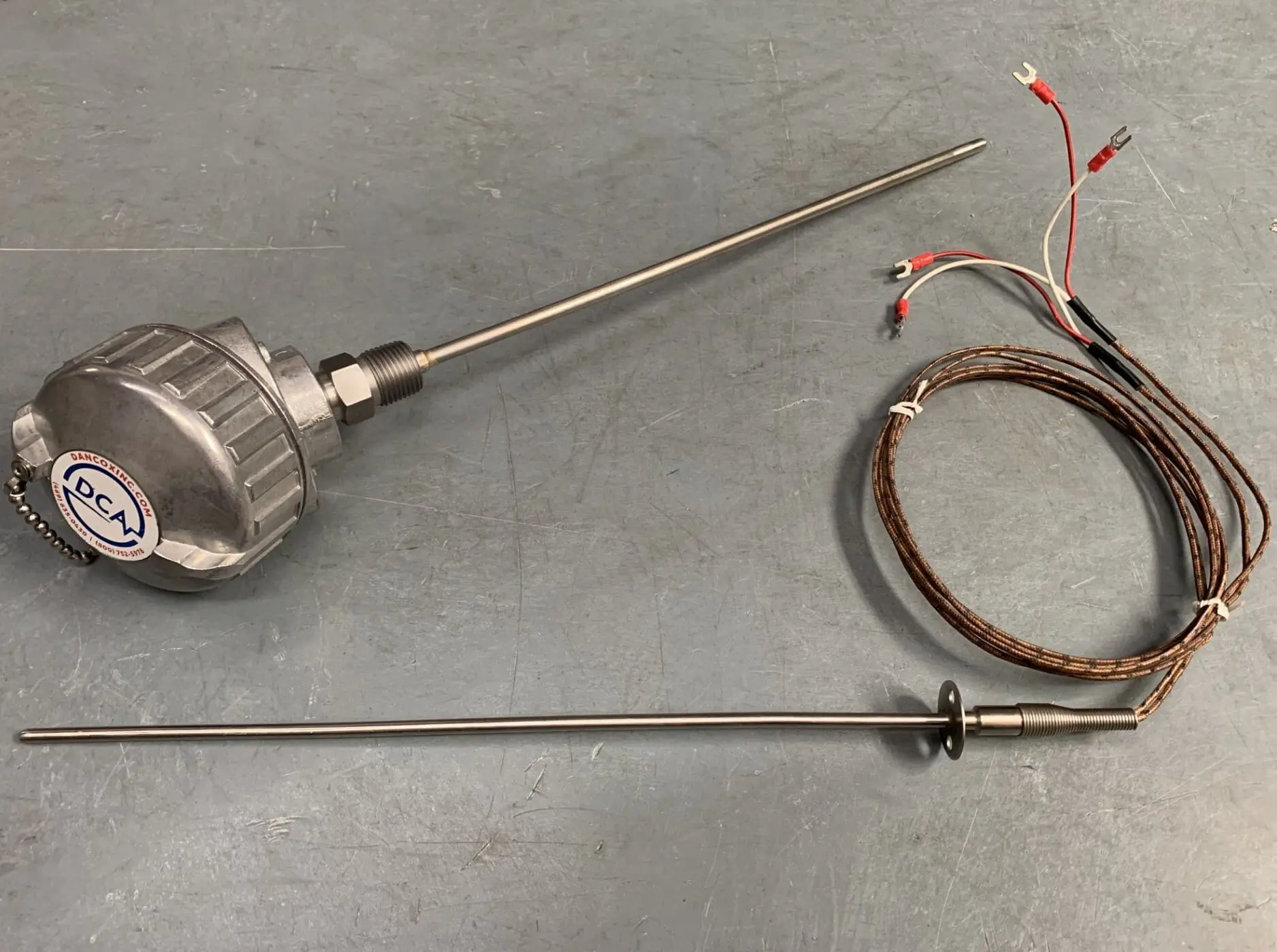
When it comes to industrial temperature measurement, two of the most common sensor types are RTDs (Resistance Temperature Detectors) and thermocouples. While both are designed to measure temperature, they operate differently and are best suited for different applications.
At Dan Cox & Associates, we help customers select the right sensing technology for their process, environment, and accuracy requirements. Here’s a simple breakdown of the differences between RTDs and thermocouples.
What Is an RTD?
An RTD (Resistance Temperature Detector) measures temperature by correlating temperature with changes in electrical resistance.
Most RTDs are made from platinum because platinum provides stable, repeatable resistance changes over a wide temperature range.
How RTDs Work
As temperature increases:
- The resistance of the RTD element increases
- A transmitter or controller interprets the resistance change as temperature
What Is a Thermocouple?
A thermocouple measures temperature using two dissimilar metals joined together at one end. When the junction experiences temperature changes, it generates a small voltage.
How Thermocouples Work
- Two different metal wires form a sensing junction
- Temperature changes create a millivolt signal
- Instrumentation converts the voltage into a temperature reading
There are several thermocouple types, including:
- Type J
- Type K
- Type T
- Type E
- Type N
Each type is designed for different temperature ranges and environments.
RTD vs. Thermocouple: Key Differences
| Feature | RTD | Thermocouple |
|---|---|---|
| Accuracy | Higher accuracy | Moderate accuracy |
| Temperature Range | Moderate range | Very wide range |
| Stability | Excellent long-term stability | Good, but drifts over time |
| Durability | More delicate | More rugged |
| Signal Type | Resistance | Millivolt voltage |
| Best Use | Precision measurement | High heat & rugged environments |
Accuracy Comparison
RTDs
RTDs are known for:
- High precision
- Excellent repeatability
- Stable measurements over time
Typical RTD accuracy:
- ±0.1°C to ±0.3°C
RTDs are ideal when:
- Tight temperature control is required
- Product quality depends on accurate readings
- Calibration stability matters
Thermocouples
Thermocouples are generally less accurate but highly versatile.
Typical thermocouple accuracy:
- ±1°C to ±2°C or greater
However, they excel in:
- Extreme temperatures
- Harsh industrial environments
Temperature Range Comparison
RTD Temperature Range
Most RTDs operate between:
- -200°C to 600°C (-328°F to 1112°F)
- Some specialty designs reach higher
Thermocouple Temperature Range
Thermocouples can handle:
- -200°C to over 2,000°C (-328°F to 3632°F ) depending on type
This makes thermocouples the preferred choice for:
- Furnaces
- Kilns
- Exhaust systems
- High-temperature process applications
Which Sensor Is Better?
The answer depends on the application.
Choose an RTD When You Need:
- High accuracy
- Long-term stability
- Precise process control
- Lower temperature measurements
Common RTD applications:
- Food & beverage
- Pharmaceutical
- HVAC
- Laboratories
- Chemical processing
Choose a Thermocouple When You Need:
- Extremely high temperature capability
- Fast response
- Rugged construction
- Lower sensor cost
Common thermocouple applications:
- Heat treating
- Boilers
- Engines
- Manufacturing
- Industrial furnaces
Can RTDs and Thermocouples Be Interchanged?
Sometimes, but not always.
Key considerations include:
- Temperature range
- Input type compatibility
- Required accuracy
Many modern transmitters and control systems can accept either RTD or thermocouple inputs, but proper configuration is critical.
Final Thoughts
Both RTDs and thermocouples are proven temperature sensing technologies, but each has strengths and limitations.
- RTDs provide superior accuracy and stability
- Thermocouples offer wider temperature ranges and greater durability
Choosing the correct sensor depends on your process conditions, environmental factors, and performance requirements.
If you need help selecting the right temperature sensor for your application, the team at Dan Cox & Associates can help you evaluate the best solution for your operation.